2027 church ad strategyFacebook & Instagram ads
The 3 Best Social Media Ad Campaigns for Churches
Give people nearby an easy first step.
Some people are ready to pick a Sunday. Others would rather ask a question, or quietly look around before they come. These three campaigns meet each of them where they are, and this page shows how each one works, what it asks of your team, and how to tell if it is working.
Why one campaign is not enough
Meet theinvisible audience
For the last two years, the standard church ad has asked for a name, an email, a phone number, and the Sunday someone plans to visit. That works for some people. But plenty of regular folks will not hand a phone number to an organization they have never visited, especially for an ordinary Sunday. They still come. You just never see them coming.
The form-filler
Comfortable sharing contact details. Easy to count, and worth following up with.
- Sees your adA short invitation video in their feed.
- Fills out the formName, email, phone, and a Sunday.
- Lands in your databaseYour team can call or text before Sunday.
The catch: some sign up with no real plan to visit, or because they want help with something else. Quality is hit-or-miss, so each lead has to be inexpensive.
The quiet researcher
Interested, but private. They check you out on their own and decide without telling anyone.
- Sees your ad“This looks nice. Let me learn more.”
- Taps your profile pictureScrolls your Facebook or Instagram photos and posts.
- Opens your websiteLooks for the address and service times.
- Watches part of a sermonA few minutes on YouTube is enough.
- Shows up and sits in the backNo form. No stop at the guest table.
- Says hello around week three“How did you hear about us?” “I saw you online.”
The catch: none of this shows up as a lead. If the form is the only thing you measure, this guest looks like a failed ad.
A regular Sunday is a casual ask.
People will register for a once-a-year event. For a service that happens every week, a phone number can feel like too much to give.
Your whole presence is the ad.
The profile, the website, and the sermon clips do the convincing. They have to be ready before the ad runs.
Different people need different doors.
So the answer is not one better form. It is three campaigns, each asking for a different first step.
The three campaigns
What would help someonetake the first step?
Each campaign uses a short local video. The difference is what the video asks the viewer to do next, and how much work that creates for your team.
Plan Your Visit ads
Invite people to choose a Sunday and tell your team how to reach them.
Direct message ads
Let guests ask a question on Facebook or Instagram before they share anything else.
Warm-up and website ads
Show local people your best videos first, then invite the ones who watched to visit your website.
| Campaign | Best when | Work for your team | Judge it by |
|---|---|---|---|
| 01 Plan Your Visit ads | You want contact details and will follow up with every lead. | Call or text each person before Sunday. | Cost per form lead. Aim for under $7 to $8. |
| 02 Direct message ads | You have a warm, quick people-person who enjoys conversation. | Reply fast, and like a person, whenever a message arrives. | Conversations started, and how quickly you answered. |
| 03 Warm-up and website ads | You want reach without adding follow-up work. | Keep your website and profiles ready for guests. | Local people who watched, website visits, and attendance over time. |
Campaign 01Plan Your Visit ads
Keep the form.Cut the cost per lead.
A short video invites local people to church. A form inside Facebook or Instagram lets them choose a Sunday and leave a way for your team to follow up. Because the quality of form leads is hit-or-miss, the goal is simple: make the form easy to fill out and each lead inexpensive.
- Interrupt the scroll. The first seconds decide whether anyone stops. Test openings that look nothing like a typical church ad, including the news-alert style shown here.
- Speak to a specific local audience. Name the city first, then give people there a clear reason to come.
- Ask a question that shows intent. “Which Sunday are you thinking about?” helps your team prepare and filters out casual taps.
- Follow up before Sunday. Have someone call or text on Friday or Saturday to confirm plans and answer last questions.
- Keep testing. Run several videos side by side, turn off the expensive ones, and put the budget behind the winner.
Best fit: your team will follow up with every person who submits a visit plan.
Illustration of the news-alert style behind our lowest-cost test so far. Keep it honest: use a real number and real photos of your church.
What does a high-intent lead cost?
Every form submission counts as a lead. Move the sliders to estimate the cost of reaching someone who intends to show up.
Actual intent and attendance vary by campaign.
Ten forms at $14 each cost $140. In this example, 3 out of every 10 leads intend to show up.
At $3.94 per form and the same intent rate, the estimated cost is $13.13 per high-intent lead.
Sample video script
[City], some of the strongest-looking people are carrying more than anyone else can see. Work, family, grief, stress, and the pressure to keep saying, “I am fine.” Church should not be another place where people have to perform. Jesus invites us to come honestly. At [Church Name], you will meet imperfect people who are learning to follow Jesus and support one another through real life. If you need a place to breathe, pray, and take an honest next step, we would love to welcome you. Click the link below to plan your visit.
Two easy ways to record it. Choose one. On the front steps of the church: walk toward your phone, stop, and say the city. In your parked car outside the building: look up at the lens and start talking. A phone is all you need.
News-alert headline
BREAKING NEWS: Something is happening at this [City] church, and over [number] families are in on it.
Why it works: people have learned to stop for a headline. Pair it with a real photo from a Sunday, a red circle around the pastor, and a form that asks which Sunday they plan to come. This style is not for every church, so treat it as one test among several.
Campaign 02Direct message ads
Let people askbefore they commit
A phone number feels personal. A message does not. People send them all day, in apps already on their phones. So this ad says it plainly: we do not want your phone number or your email. Tap Send Message and ask us anything.
Sounds like a robot
Do you guys have anything for kids?
Hi! Thanks for reaching out. Do you have any questions for us?
No, I’m good.
A canned reply ignores the question and ends the conversation.
Sounds like a person
I only go to churches that teach from the King James Version.
Good question. We teach from the ESV, and our pastor does quote the King James sometimes. By the way, I saw you took the grandkids out for pizza and games. Looks like a great day! Our kids’ ministry would love to meet them.
Ha, we had a great time. What time is service?
10:30 this Sunday. I’ll watch for you at the front doors.
Answer honestly, then be a person. A glance at a public profile gives you something real to say.
Illustrative conversations.
- Say what you are not asking for. The video tells viewers you do not want a phone number or an email, only their question.
- Point to the button. Send Message opens Messenger or Instagram, so there is no form to load and nothing new to learn.
- Put one person in charge. Choose someone who enjoys people and will see the notification right away.
- Answer first, invite second. Once the question is handled, help them pick a service or find the right entrance.
This one adds work. Replies have to come quickly and sound human for as long as the ad runs. A volunteer who is not sold on it will send “Hi, any questions?” and the conversation will stop there. If nobody on your team can own the inbox, start with campaign 1 or 3.
Best fit: someone on your team has a gift for conversation and can keep up with new messages.
Sample video script
[City], I am not going to ask for your phone number or your email. I know that is a lot to hand a church you have not visited yet. If you have a question about [Church Name], like what we have for kids or what to wear, tap Send Message below. A real person on our team will answer, and we would love to see you this Sunday.
Two easy ways to record it. Choose one. In the church lobby: hold your phone up as if reading a message, lower it, and start talking. Outside by the church sign: turn from the sign to the lens and begin. A phone is all you need.
Rules for the inbox
- Reply within minutes whenever you can.
- Use their name, and yours.
- Answer the question they actually asked, even the awkward ones.
- Mention one real thing so they know a person is typing.
- Offer to meet them at the door on Sunday.
Skip the auto-replies. Automatic, corporate-sounding messages are what everyone else sends. A human answer is the whole point of this campaign.
Campaign 03Warm-up and website ads
Let them get to know you.Then invite them.
Give neighbors a chance to see what your church is like before you invite them to Sunday service. Use two rounds of ads. First, show them videos your church has already made. Then give people who engaged a friendly invitation and a link to explore your website at their own pace.
- Weeks 1 and 2Show what your church is likePick four or five videos that are already doing well on your Facebook page. Try a sermon clip, a Sunday highlight reel, or a fun moment. Run them as ads near your church with no invitation or call to action.
- During the warm-upBuild your retargeting audienceWatch which clips people view and interact with. Use eligible views and engagement to build the audience for your follow-up ad. Seeing a few clips gives neighbors time to get familiar with your church.
- Week 3Invite them to SundayShow that audience a separate invitation video with a link straight to your guest page. Invite them to come Sunday or look around online. Let them see what to expect without filling out a form or sharing a phone number or email.
Is your website ready for guests?
7 checks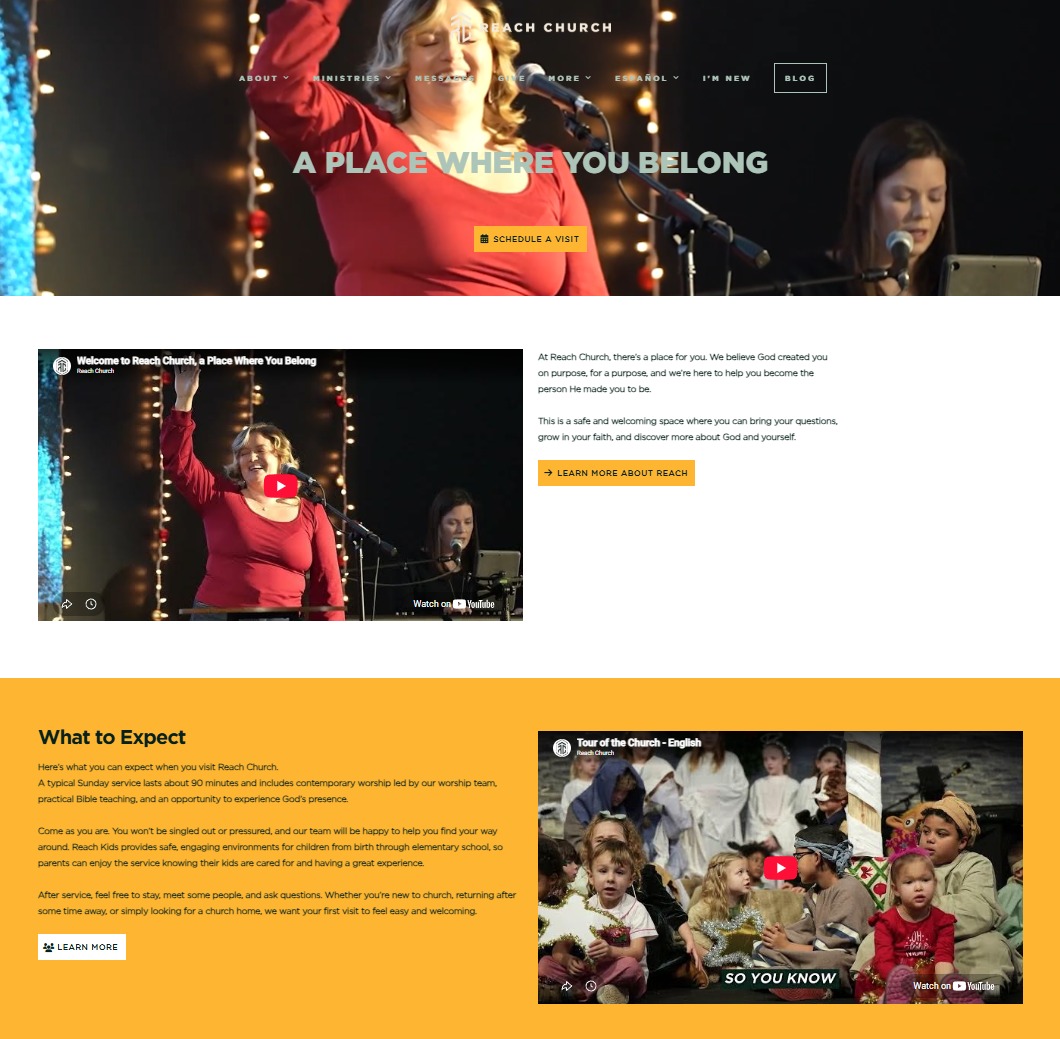
Best fit: you want more local people to know your church without adding follow-up work for your team.
Sample invitation script (week 3)
[City], if you’ve seen a few of our videos lately, I wanted to say hello. I’m [Name] from [Church Name], right down the road on [Street]. We’d love to have you this Sunday. If you’d like to see what a Sunday is like first, tap the link to our website. You can look around without sharing your phone number or email. No pressure.
Two easy ways to record it. Choose one. On the sidewalk in front of the church: point over your shoulder at the building as you start. Seated in the front row of the sanctuary: turn from the stage to the lens and begin. A phone is all you need.
How to tell if it’s working
Track each step. Watch video views and engagement during the warm-up. Once the invitation runs, track visits to your guest page. Have an usher take a headcount each Sunday and compare attendance and first-time guest counts with the weeks before the ads started.
Ask guests how they found you. Put “How did you hear about us?” on the connect card or ask in the lobby. Look at those answers alongside the attendance trend, since personal invitations and other outreach can also bring guests in. See what to track each Sunday.
Real client work
What testingactually changes
The first ad is rarely the winner. These two client campaigns show how much the cost of a form lead moves when you test different creative against the same audience.
Three rounds of testing took the cost per lead from $66 to $3.94.
Cost per Plan Your Visit form lead, by ad tested. Lower is better.
| Ad tested | Cost per form lead |
|---|---|
| First video | $66 |
| A later video | $34 |
| News-alert style ad | $3.94 |
Our target: under $7 to $8 per form lead. The winning ad brought in 17 form leads at $3.94 each.
Source: Meta Ads Manager for a CCM client campaign, about 30 days ending November 2026. A lead is a form submission, not a confirmed visit. Results vary by church and campaign.
Same budget, same campaign: the video brought in nearly twice the leads of the graphic.
Each ad spent about $500.
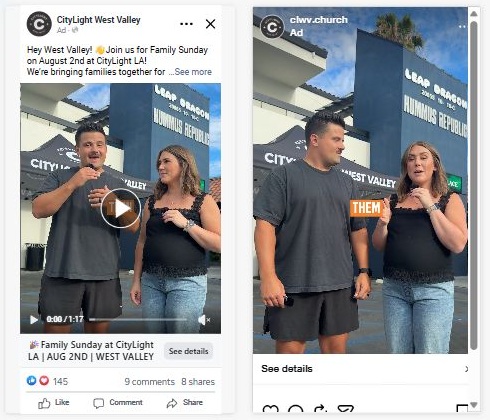
Meta form leads
| Ad | Form leads |
|---|---|
| Video ad | 89 |
| Graphic ad | 47 |
Cost per form lead (lower is better)
| Ad | Cost per form lead |
|---|---|
| Video ad | $5.62 |
| Graphic ad | $10.64 |
Source: Meta Ads Manager, checked November 5, 2026. Spend was $500.00 for the video and $499.99 for the graphic. Attendance is tracked separately. Results vary by campaign. Read the CityLight case study.
Which campaign should you start with?
Two honest questions about your team. The answer points to the campaign you can actually sustain.
Many churches run more than one. Start with the one your team can keep up with, then add the next.
Your team can follow up with leads, so collect them. Keep testing new ads until each form costs under $7 to $8.
See how it worksWhat to measure
Count the guestsa form never shows you
Before phone numbers became the scorecard, churches watched the room. That still works, and it is the only way to see the quiet researcher who never filled anything out.
Count at the door
A volunteer with a counter, every Sunday. Since the ads started, is the number going up or down?
Ask on the connect card
Add “How did you hear about us?” and include “Saw you online” as an answer.
Ask in the lobby
When you meet a new face, ask how they found you, and write the answer down.
Be honest about what the count proves. Attendance alone cannot tell you the ads caused the growth, because members invite people too. That is why the “How did you hear about us?” answers matter. Together, the two give you a fair picture. It is how most large brands judge their advertising: run the ads, then watch whether the numbers move.
| Campaign | What to track |
|---|---|
| 01 Plan Your Visit ads | Cost per form lead, and how many people confirm a Sunday. |
| 02 Direct message ads | Conversations with prospective guests, and how quickly you replied. |
| 03 Warm-up and website ads | Local people who watched and interacted, and visits to your website. |
| Every campaign | Weekly attendance, first-time guests, and “saw you online” answers. |
Questions pastors ask
Church ad campaignquestions, answered
What is a Plan Your Visit ad?
It is a Facebook or Instagram ad, usually a short video, that invites people near your church to choose a Sunday to visit. A form inside the app collects a name, an email, a phone number, and the Sunday they plan to come, so your team can follow up before they arrive.
What is a good cost per lead for church ads?
For Plan Your Visit form ads, we aim for under $7 to $8 per form lead. In one fall 2026 test for a client church, the cost per lead fell from $66 on the first video to $3.94 after several rounds of new ads. Keep in mind that a lead is a form submission, not a confirmed visit, and results vary by church.
Why do so few people fill out our visit form?
Many people are not comfortable giving a phone number and email to an organization they have not visited, especially for a regular Sunday service. They are more likely to look at your social profiles, your website, and a sermon clip, then simply show up. A form will never count those guests, which is why it helps to offer other first steps.
Do direct message ads work for churches?
They can, when someone on your team replies quickly and personally. Sending a message is easier for most people than sharing a phone number. The tradeoff is the workload: the campaign depends on a person who answers like a person, not an automatic reply. We are testing this approach with a small number of client churches now.
How does a warm-up and website campaign work?
For the first two weeks, four or five of your best-performing videos are shown to people within about five miles of your church, with no call to action. In week three, the people who watched and interacted see one invitation video that links to your website. Nobody is asked for contact details.
How do we know ads are working if nobody fills out a form?
Track weekly attendance and first-time guests, and ask every new guest how they heard about you, on the connect card and in the lobby. Attendance alone cannot prove the ads caused the change, so use both signals together and watch the trend over several weeks.
Which campaign should our church start with?
Start with the one your team can sustain. If you can follow up with every lead, run Plan Your Visit ads. If you have someone gifted at conversation who can reply fast, try direct message ads. If nobody has time for follow-up, run a warm-up and website campaign and make sure your site is ready for guests.
Does Creative Church Marketing run these campaigns for churches?
Yes. We help you choose the campaign, create the ads, and set up the form, inbox, or guest page. Because we also manage websites, social media, and video for churches, the places people go after they see an ad can be ready for them. Ad spend is separate from our fee.
Your next step
Which campaignfits your church?
Tell us who you want to reach and what Sunday looks like. We will help you choose the campaign, create the ads, and set up the form, inbox, or guest page. Your team will have a clear plan for follow-up.
- Who you want to invite
- Which campaign to test first
- What we can build with footage you already have
- What budget makes sense
Keep going: Plan Your Visit video examples · Social media ads case study · Church livestreaming guide · 13 church marketing ideas for 2026 and 2027
Campaign results come from Meta Ads Manager for CCM client campaigns. A lead is a form submission, not a confirmed visit, and results vary by church and campaign. Ad spend is separate from CCM’s fee. The ad and message examples on this page are illustrations.